

A common misconception, repeated in true-crime coverage and even some training materials, holds that forensic ground-penetrating radar (GPR) “sees” buried bodies the way an ultrasound sees soft tissue. It does not. Ground-penetrating radar detects disturbed soil, voids, moisture changes, and material contrasts, and those signals fade or persist based on burial conditions. This article walks through what the technology actually detects, what changes detection success, and where other methods earn their place alongside it in forensic investigations.
Key Takeaways:
-
Ground-penetrating radar (GPR) detects disturbed soil, voids, and material contrasts, not bodies directly
-
Detection window shrinks from years to months as soil shifts from sandy to clay
-
Skeletal remains are nearly invisible to GPR; wrapping or grave goods stay visible longer
-
Antenna frequency, line spacing, and companion methods drive whether a search succeeds
What Forensic GPR Actually Detects (and What It Doesn’t)
A Forensic Science International study that monitored GPR over 111 weeks found the method valuable for detecting clandestine graves but almost useless once remains were skeletal.
That Forensic Science International study reframes what forensic GPR is for. The instrument does not image biological material; it records reflections from changes in soil density, moisture, and material composition, then plots those reflections as GPR profiles operators interpret as candidate anomalies.
Interpretation is probabilistic, and excavation remains the only way to confirm what an anomaly represents. Understanding how ground-penetrating radar works at this level is what separates a useful forensic search from a wasted afternoon.
Anomalies, not images
Forensic operators look for several recurring anomaly types in GPR data:
-
Disturbed soil where the original stratigraphy has been cut and refilled
-
Voids or air gaps from collapsed burial cavities
-
Moisture contrasts caused by differential drainage in backfilled soil
-
Reflections from wrapping materials, grave goods, or other buried objects
-
Soil compaction differences between the grave fill and surrounding ground surface
Why excavation still confirms findings
Even a high-confidence anomaly can match a tree stump, a buried rock, or an old utility cut. This is why forensic interpretation builds toward excavation rather than replacing it, and why investigators framing law enforcement applications of GPR treat the radar pass as a triage step, not a verdict.
Forum discussions among criminal investigations professionals frequently surface frustration that ground-penetrating radar will not produce ultrasound-quality images of human remains. It will not. What it will do is narrow a hectare-scale search area to a handful of dig points, which is a different and more useful kind of evidence for law enforcement agencies working to locate clandestine graves.
How Soil, Burial Wrapping, and Time Change Detection Success

Three variables drive whether a forensic GPR search succeeds or fails: soil type, burial wrapping, and the time elapsed since burial. Each one shifts what the radar can resolve, and they compound. Treating “soil conditions” as a single vague factor is the most common interpretation mistake in forensic and archaeological prospection work alike.
Soil type and the detection window
According to a review in Remote Sensing, controlled studies found large cadavers remained detectable for almost two years in sandy soils but only six months in clay.
That Remote Sensing review maps directly onto the physics of the method. Sandy soils have low electrical conductivity and stable dielectric properties, which lets electromagnetic pulses travel further and return cleaner reflections. Clay holds water, raises conductivity, and attenuates radar signals before they reach grave depth.
The practical consequence is that the same recent burial detectable for almost two years in one jurisdiction may be invisible inside a season in another, and GPR accuracy depends heavily on soil conditions in ways operators must factor into search planning. Soil properties such as moisture content, clay percentage, and electrical conductivity play a critical role in determining penetration depth and signal clarity. Depth follows the same logic, which is why How Deep Does GPR Go? is rarely answered by a single number.
Burial wrapping and associated objects
The National Institute of Justice reports that burial scenarios involving rocks, lime, blanket, or tarp produced more distinctive GPR responses for longer than unwrapped carcasses. That finding flips the intuition that simulated clandestine burials should be hardest to detect when “altered” by perpetrators. Burial context factors that improve or reduce detectability include:
-
Wrapping material (tarps and blankets create strong reflective interfaces)
-
Associated metallic objects or rocks that contrast sharply with surrounding soil
-
Depth of burial relative to antenna frequency and soil attenuation
-
Volume of disturbed soil and how thoroughly the fill was compacted
-
Decomposition stage, which alters moisture and density at burial sites
Soil and burial context set the ceiling on what is detectable. Antenna choice and field setup determine whether the operator actually reaches it.
Antenna Frequency and Field Setup for Forensic Searches

-
High-frequency antennas (900 MHz and above): shallow penetration depth, high resolution suited to small targets within the first meter
-
Mid-frequency antennas (250-500 MHz): the typical forensic range, balancing depth and resolution for grave-scale features
-
Low-frequency antennas (under 250 MHz): reach greater depths but blur features smaller than roughly a meter
-
Multi-frequency systems: capture all three bands in a single pass, removing the up-front tradeoff
Most forensic and archaeological grave investigations operate in the 250 to 900 MHz range, where penetration depth and resolution both stay adequate for grave-scale targets. Choosing a frequency without first naming the target depth is the most common field error, and the multi-frequency vs single-frequency GPR decision often comes down to whether the operator can predict that depth in advance.
A worked PMC case study from an Italian cave illustrates the discipline involved: investigators ran a 500 MHz antenna at 0.5 m line spacing, calibrated velocity to 0.10 m/ns against a known reflector, and identified a curved interface near 2 m depth that focused excavation onto a single zone. Decisions about line spacing, velocity calibration, and grid orientation matter as much as antenna selection itself, which is why operators evaluating deep ground-penetrating radar often end up wanting both high-frequency and low-frequency systems.
US Radar built the Quantum Imager Triple Frequency GPR System to emit low, mid, and high signals simultaneously in a single pass, so operators do not have to commit to one frequency before they know what the site holds. Even the right antenna and setup, however, will not rescue a search in a soil or context where GPR is the wrong primary method.
How GPR Compares with Other Geophysical Methods
| Method | Best For | Where It Struggles | Pairs Well With |
| GPR | Disturbed soil, voids, wrapped burials in low-conductivity soils | Clay, saturated soils, skeletonized remains | ERT, forensic dogs |
| Electrical resistivity tomography | Deeper anomalies, conductive soils where GPR fails | Slow acquisition, lower resolution | GPR, EMI |
| Electromagnetic induction (EMI) | Rapid area screening, metallic objects | Conductive soils, fine-resolution targets | GPR, magnetometry |
| Forensic dogs / HRD | Recent burials with biological signatures | Old burials, contaminated scenes | GPR, ERT |
No single method covers every burial context, and a multidisciplinary approach is the norm in serious criminal investigations. The table above is a starting point, not a ranking, and the right pairing depends on soil type, search area size, and what evidence the case team needs to defend in court.
GPR vs. electrical resistivity tomography
According to the Florida Spodosol study from the National Institute of Justice, researchers monitored eight simulated clandestine graves and found electromagnetic induction was not viable in that soil type, while GPR remained favorable through 30 months of monitoring.
Electrical resistivity tomography fills the gap on the other side of the soil curve: in conductive clays where ground-penetrating radar struggles, ERT can still resolve burial-scale resistivity contrasts. Method choice is a soil-by-soil decision, not a technology preference. Mature law enforcement applications of GPR workflows treat method selection as the first interpretation step, before any data is collected.
When to use a multidisciplinary workflow
A single-method search makes sense for small, well-characterized sites. A multidisciplinary workflow is the better call when one or more of the following apply:
-
The search area is large enough that screening with a faster method first saves field hours
-
Soil conductivity is high enough to cripple GPR before grave depth is reached
-
False-positive risk is high (prior land use, rocky substrate, agricultural disturbance)
-
Legal proceedings will require corroboration from independent geophysical data
Cemetery work shows the same pattern, where grave location and cemetery mapping with GPR often pairs radar with documentary records and probing. Method choice is one half of the decision. The other is who runs the equipment.
When to Own a GPR System vs. Hire a Specialist
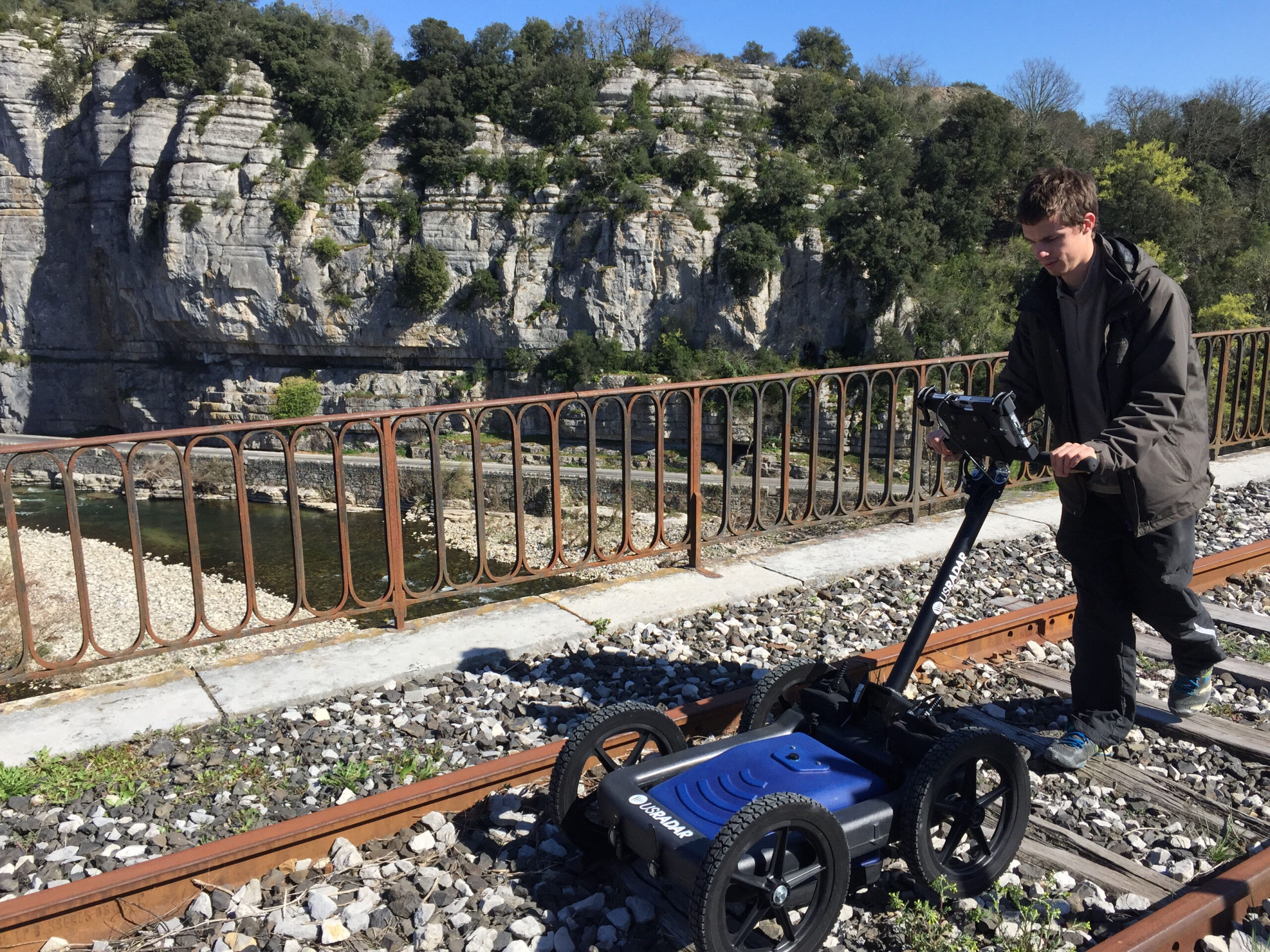
When does owning a forensic GPR system beat hiring a specialist? When scan volume is high enough, response speed matters to case outcomes, or case-team continuity across investigations is worth more than peak interpretation expertise.
Ownership becomes practical when an agency or firm runs frequent searches, needs scheduling independence, or wants the same operators on every case so interpretation accuracy improves with site exposure. Why Owning GPR Equipment Makes More Sense Than Renting or Hiring a Service lays out the broader case, but the forensic application has its own tilt: chain-of-custody is simpler when one team handles acquisition end-to-end, and response time often determines whether a recent burial is still detectable when the radar arrives.
A short evaluation checklist for agency decision-makers:
-
[ ] Estimate the number of forensic searches per year your team supports
-
[ ] Identify whether response-time delays from contractors have affected case outcomes
-
[ ] Map the soil and burial scenarios your jurisdiction faces most often
-
[ ] Decide whether in-house operators will train in interpretation or partner with forensic specialists
US Radar designs and builds GPR systems in the USA and supports operators directly through a global distribution network, so the conversation about which platform fits a specific jurisdiction tends to start with a site profile rather than a product sheet. What is the Best GPR System for Me? is the starting questionnaire, and operators ready to scope a forensic deployment can speak with a real person about your upcoming projects.
Frequently Asked Questions
What does forensic GPR actually detect?
Forensic GPR detects subsurface anomalies, including disturbed soil, voids, and reflections from buried objects, rather than biological material itself.
The radar maps changes in soil density, moisture, and material composition, and operators interpret those changes as candidate grave locations before confirming with excavation. Forum discussions among investigators frequently surface the expectation of ultrasound-quality images of human remains, but GPR profiles do not work that way. The output is probability and location, making GPR a valuable tool for narrowing search areas in criminal investigations where law enforcement teams need to locate clandestine burials.
How deep can forensic GPR see?
Depth depends on antenna frequency and soil type, with mid-frequency forensic antennas typically reaching a few meters in favorable soils.
No GPR system has a fixed depth rating outside soil context. Higher frequencies resolve fine detail near the ground surface; lower frequencies reach greater depths but blur small features. US Radar builds systems spanning shallow utility locating through deep geophysical work, and the right product for a forensic search depends on the jurisdiction’s soil profile. How Deep Does GPR Go? breaks the variables down further.
How accurate is GPR for clandestine graves?
Accuracy depends on soil type, burial age, burial condition, and operator skill, with detection success dropping sharply as remains skeletonize.
The 111-week Forensic Science International study found ground-penetrating radar valuable for fresh and intermediate-stage burials but nearly useless once remains were skeletal. Grid design, line spacing, and the operator’s familiarity with local soil signatures also shape GPR results, which is why two searches over the same site can return different answers. Locating buried evidence requires understanding how soil types affect radar signals as clandestine burials change over time.
Can GPR find unmarked graves in old cemeteries?
Yes, ground-penetrating radar is the most common method used to locate unmarked graves because shaft disturbance can persist for decades even after surface markers disappear.
One Remote Sensing review documented a cemetery survey that located 168 probable and 20 possible graves, including 68 with multiple interments, using GPR alone. The disturbed soil column from a grave shaft remains detectable long after the body itself becomes invisible to radar. Grave location and cemetery mapping covers the workflow in depth, including how penetrating radar systems handle burial sites with complex stratigraphy.
What antenna frequency should I use for grave detection?
The 250 to 900 MHz range covers most forensic grave searches, balancing penetration depth with resolution adequate for grave-scale features.
Higher frequencies improve resolution at shallow depths; lower frequencies reach further but blur small features. Triple-frequency systems from US Radar collect all three bands in one pass, which removes the need to predict target depth before scanning. Multi-frequency vs single-frequency GPR explains the operational tradeoff in more detail, including how GPR applications in forensic contexts benefit from multi-frequency coverage.
Why can’t GPR just confirm a body without excavation?
Ground-penetrating radar maps subsurface anomalies, not biological material, so a strong reflection alone cannot distinguish a grave from a rock, void, or prior disturbance.
Even when an anomaly matches grave-shaped expectations, alternative causes remain plausible until excavation rules them out. Legal proceedings rely on physical recovery of evidence; radar interpretations support probable cause and dig planning, but they do not stand in for ground-truthing. Treating GPR as a screening method rather than a verdict keeps the chain of evidence defensible in forensic investigations where buried caches, concealed evidence, or human remains must be recovered and documented.
Should our agency own a GPR system or hire a forensic specialist?
The decision turns on scan volume, response speed needs, and whether case-team continuity matters more than peak specialist interpretation.
Law enforcement agencies running frequent searches, working across jurisdictions, or facing scheduling constraints generally benefit from owning equipment and training internal operators. Lower-volume needs may justify contracting forensic specialists for each case. US Radar’s distribution network supports operator selection conversations, and agencies weighing the decision can contact US Radar to scope a deployment against their actual caseload.