

Quantum Imager Triple-Frequency GPR System
The Quantum Imager is the first true triple-frequency range ground-penetrating radar system ever produced. The antenna emits three separate signals simultaneously, allowing you to survey greater depths with higher resolution in a single scan. Stepped ultra-wideband pulses combine the advantages of pulse radar and stepped frequency radar for unsurpassed resolution and depth. Direct RF sampling technology creates clearer, easier-to-understand images than previously possible with older radar technologies, making GPR underground mapping faster and more accurate across every application.
With the ability to detect targets from fiber optic lines to utility lines up to 30+ feet (9 m) deep, this GPR unit delivers real-time imaging for confident decision-making in the field. Whether you’re mapping buried objects before construction, locating subsurface infrastructure before excavation, or conducting environmental surveys, the Quantum Imager is the system professionals rely on when accurate data matters most.

Why Triple-Frequency Changes Everything

Three Signals, Three Independent Datasets
The triple-frequency antenna generates three independent datasets across the low, mid, and high frequency ranges, which can be viewed and cross-compared for superior accuracy. Low frequencies achieve deep penetration for detecting subsurface features well below the surface. Mid-range frequencies precisely locate utility lines, conduits, and other subsurface infrastructure at typical burial depths. High frequencies deliver the resolution required for detailed imaging of shallow targets. All three work simultaneously in a single scan, so you collect comprehensive GPR data without multiple passes.
Dual-frequency systems miss the middle frequencies ideal for locating targets like buried utilities, leaving gaps in your data. The Quantum Imager eliminates those gaps entirely.
Direct RF Sampling for Clearer Images
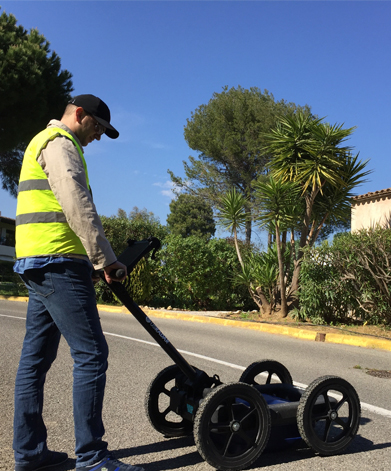
Direct RF sampling creates clearer images that reduce the time spent on data interpretation. Subsurface features appear with greater definition, making it simpler to distinguish between buried objects, utility lines, and natural ground conditions. The result is GPR scans you can interpret quickly and confidently, translating directly into faster, more accurate decisions on construction projects and sites with dense subsurface infrastructure.
Built for Real-World Field Conditions
Power On, Auto-Calibrate, Start Scanning
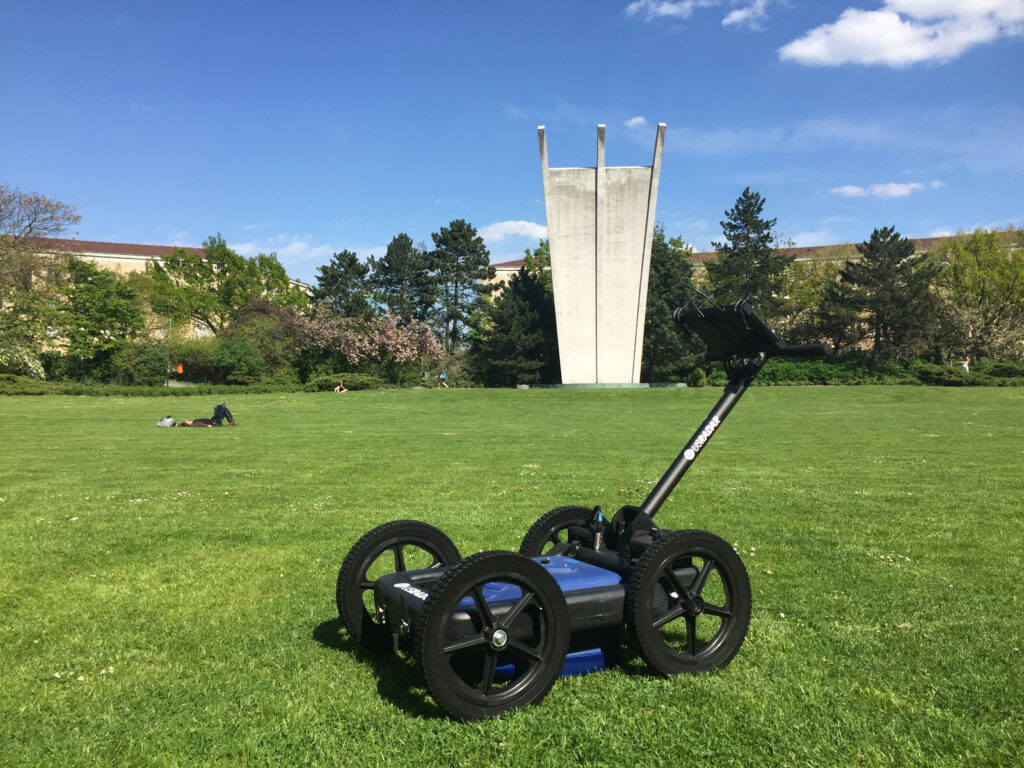
Connect the battery, power on the system, and the Radar Acquisition Software auto-calibrates the antenna to the surrounding soil conditions. Setup is straightforward, with no manual configuration required. The system adapts to the materials present at your location and begins displaying real-time subsurface imaging as you collect data. As you move between different ground conditions on the same site, the Quantum Imager adjusts automatically while recording your findings for future analysis.
Durable, Weather-Resistant Hardware
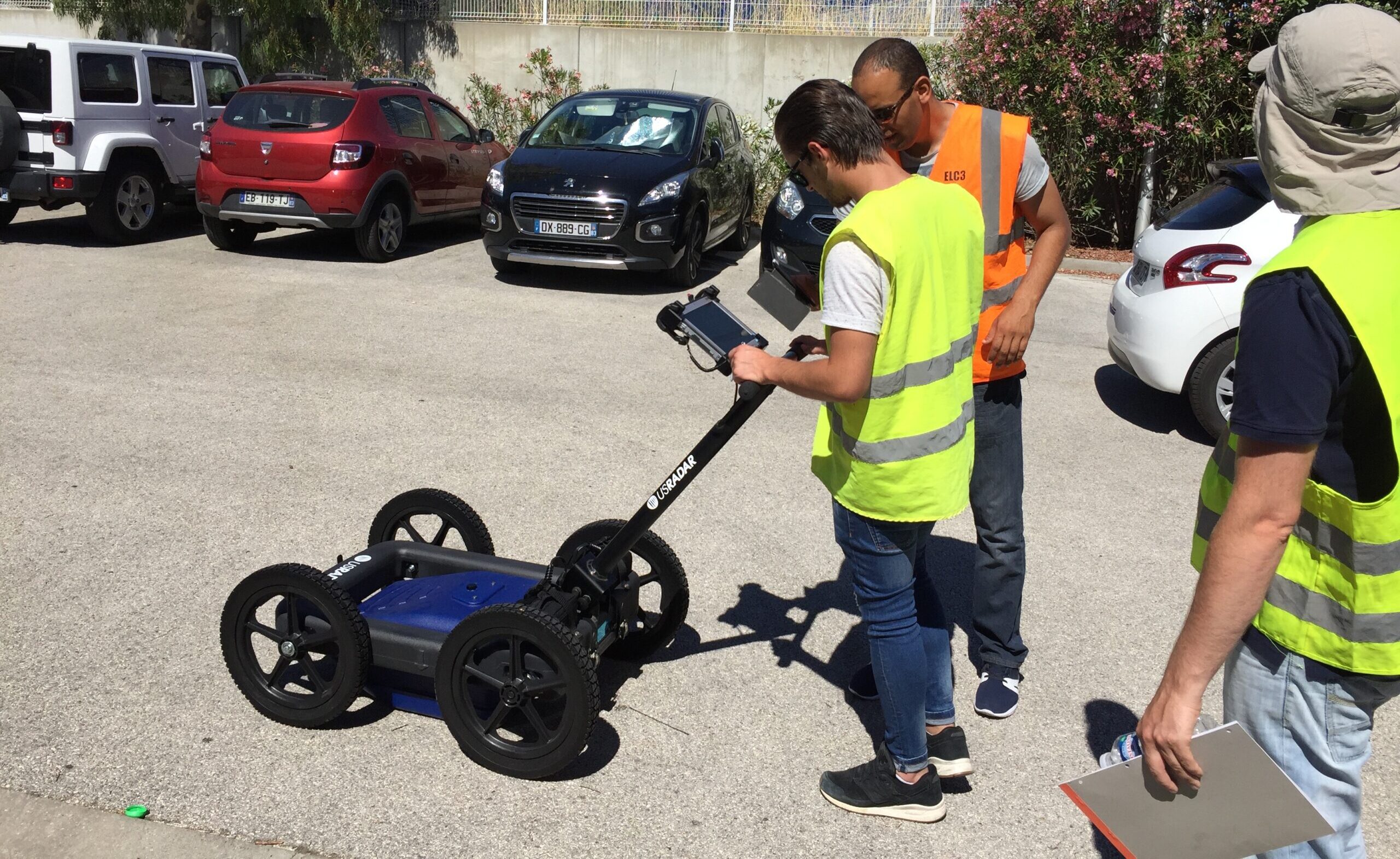
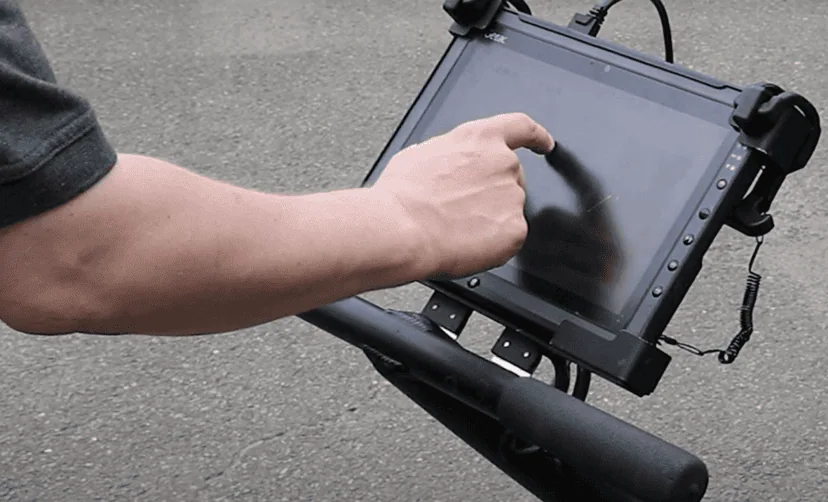
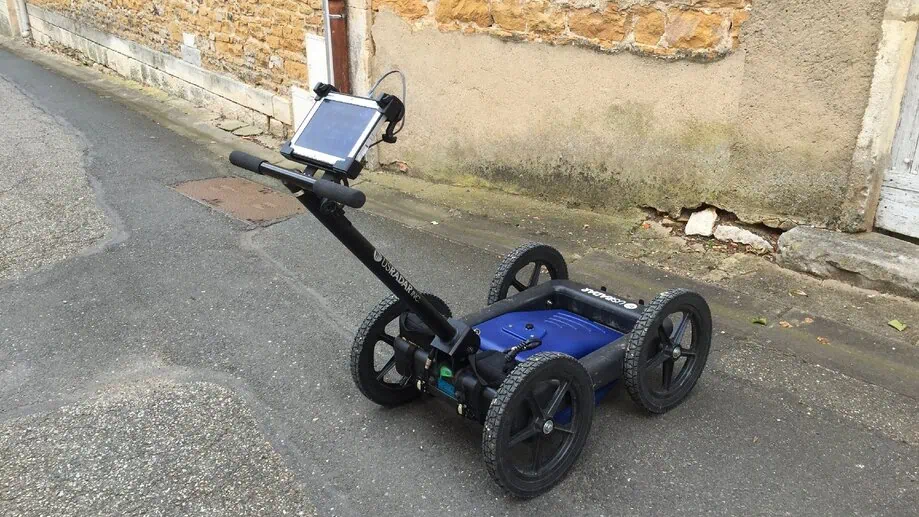
The daylight-readable Getac tablet interface features a high-performance CPU for real-time data processing in any conditions. Each battery pack delivers up to 8 hours of continuous operation. Airless, solid tires require no maintenance and cannot go flat. The foldable cart handle provides practical storage and easy transport between job sites. Every hardware detail is informed by the real-world experience of professionals in the field.
GPR Underground Mapping Applications

Utility Locating and Construction Support
The Quantum Imager excels at utility locating where accurate detection of buried infrastructure is critical for safety and project efficiency. The triple-frequency system detects gas lines, water mains, electrical conduits, fiber optics, and other utility lines that lie beneath the surface. With precise depth and location data, you can plan excavation with confidence and protect buried infrastructure throughout every phase of your project.
For construction and engineering teams, the system helps determine what lies beneath before breaking ground, identifying buried objects, voids, and subsurface materials that could affect project timelines. Real-time GPR data enables informed decisions on-site, and permanent digital records can be stored, exported, and shared by all project stakeholders for quality engineering analysis.
Environmental, Geophysical, and Archaeological Surveys
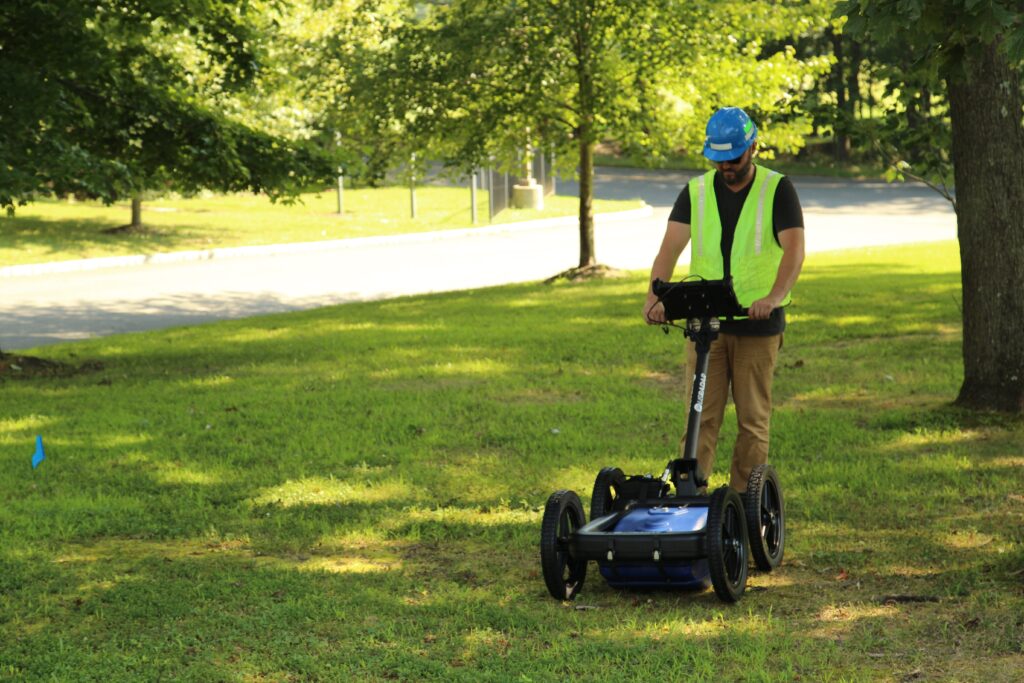
Environmental professionals use the Quantum Imager to map subsurface features without invasive drilling or excavation. The electromagnetic signal penetrates the ground and produces detailed images of underground conditions, supporting environmental assessment and site characterization.
For geophysical applications, the triple-frequency range delivers the depth and resolution needed to identify underground anomalies, soil layers, and geological features. Archaeological professionals rely on the system to locate buried objects and structures without disturbing the surface, imaging both shallow artifacts and deeper features in a single scan. The non-destructive nature of ground-penetrating radar makes it the preferred method for sensitive sites across industries where preservation matters.
Software and GPS Integration
Field Software and Post-Processing
The Radar Acquisition Software (Premium package included) auto-calibrates and displays subsurface findings in real time while recording data. You can mark and label points, measure distances between detected objects, and enhance images at particular depths using time-varying gain.
Radar Studio provides optional post-processing with annotation, depth-slice creation, and 3D imaging and modeling capabilities. The software integrates GPS data and mapping features, enabling as-built maps to be compared to radar data for precision locating. Export options include CAD files, Google Earth files, and formats compatible with third-party software packages.
Optional GPS Integration
The Quantum Imager supports GPS integration with a dedicated pole mount centered over the antenna for maximum accuracy. The system works with most high-end GIS and RTK units, enabling georeferenced point files that can be exported into any popular mapping software. In conjunction with subsurface detection, GPS transforms the Quantum Imager into a complete underground mapping solution with permanent records for stakeholders across your team.

Designed and Built in the USA
US Radar manufactures the Quantum Imager in Morganville, New Jersey, with over 30 years of field experience guiding every design decision. Product design is driven by end-users and supported by a worldwide distribution network, delivering the quality, accuracy, and reliability field professionals demand. Contact our team to learn which configuration is right for your applications.
Contact Us
Ready to see what the GPRover can do for your next project? Contact our team to discuss your utility mapping needs, or explore which GPR system is best for you.
Frequently Asked Questions
What is triple-frequency GPR, and why does it matter?
The antenna emits three separate signals simultaneously across low, mid, and high frequency ranges, generating three independent datasets for cross-comparison. Low frequencies achieve greater depth, mid frequencies are ideal for locating buried utilities, and high frequencies deliver detailed near-surface resolution. You get all three in a single scan.
How does the Quantum Imager create underground maps?
The system transmits low-power electromagnetic energy into the ground using a transmitter antenna. Signals reflect off buried objects and subsurface features, and the receiver records the time and amplitude of each reflection. The software processes this data in real time. With optional GPS integration, each data point is georeferenced for export to CAD, Google Earth, and GIS platforms.
What can the Quantum Imager detect?
The system detects utility lines (gas, water, electric, fiber optic, telecommunications), conduits, voids, buried objects, and subsurface features across varying ground conditions. Triple-frequency range provides flexibility to image both shallow targets and deeper features. Whether locating subsurface infrastructure before construction or mapping conditions for archaeological or environmental investigations, the Quantum Imager delivers clear, accurate GPR data.
How deep can the Quantum Imager scan?
The system detects targets from fiber optic lines to utilities up to 30’+ (9m) deep. Actual depth performance depends on ground conditions, as soil composition and moisture levels influence how electromagnetic signals propagate through subsurface materials. The triple-frequency antenna maximizes penetration while maintaining mid-frequency clarity at typical burial depths.
Does GPR work in wet clay soils?
Ground-penetrating radar can operate in wet clay soils but is generally limited to detecting near-surface disturbances in such environments. Highly conductive soils reduce penetration depth. The Quantum Imager’s triple-frequency range maximizes detection within these constraints by scanning across multiple frequency ranges simultaneously. For identifying soil composition, excavation and coring remain the only reliable methods, though GPR can map subsurface layers across a project site.
What software is included?
The Premium package of Radar Acquisition Software is included for field data collection and real-time display with auto-calibration. Radar Studio is available separately for advanced post-processing, 3D modeling, and export to CAD, Google Earth, and third-party software formats.
Do I need specialized experience to operate this system?
Simply connect the battery, power on, and the software auto-calibrates to surrounding soil conditions. The intuitive interface displays real-time subsurface images as you scan, so you’re seeing results immediately. US Radar designs every system for straightforward operation, ensuring operators achieve professional results confidently. Our support team is available for professionals who want to develop advanced post-processing capabilities.