

GPRover Utility Mapping System

Precision Below the Surface

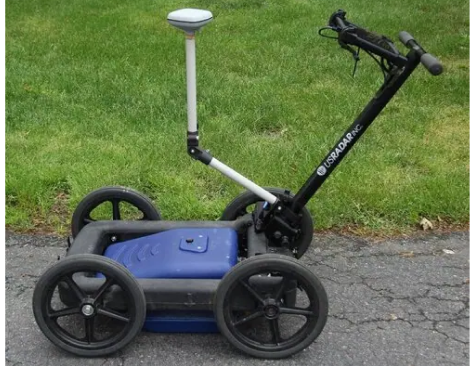
The GPRover is US Radar’s most popular ground-penetrating radar system for utility mapping. This GPR utility locator detects targets ranging from fiber optic cables to buried utilities up to 30 feet (9.14 m) deep, combining advanced ground-penetrating radar (GPR) technology with precision GPS connectivity to create subsurface maps in real time. Three separate datasets generated simultaneously by the triple-frequency antenna can be analyzed and cross-compared to deliver accurate data for the crew on the job site.

Simply connect the battery, power on, auto-calibrate the antenna, and start scanning. No base station or control points required.

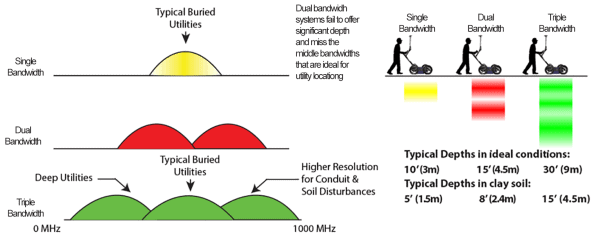
GPRover is built on the award-winning triple frequency range antennas introduced with our Quantum Imager. Triple bandwidth offers superior penetration depth and resolution compared to other imaging technologies. This is because other dual frequency range systems miss the higher resolution high frequencies and the deeper imaging low frequencies. With our signature triple frequency radar system, we close that gap.

Unlike many other multi-bandwidth locating technologies on the market, ones that only offer a zoomed-in copy of the first dataset as a “second” perspective, the US Radar triple frequency range antenna emits three separate signals and compiles three separate datasets that can be viewed simultaneously. This means that you can cross-compare your findings with greater accuracy and confidence that you’ve thoroughly done your job.

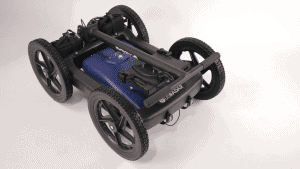
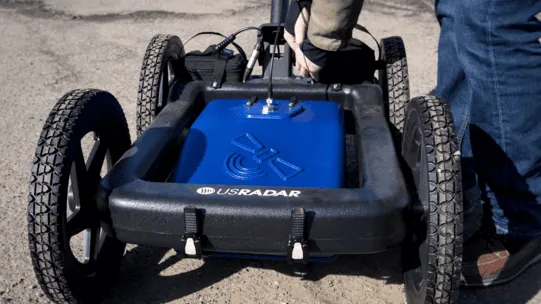
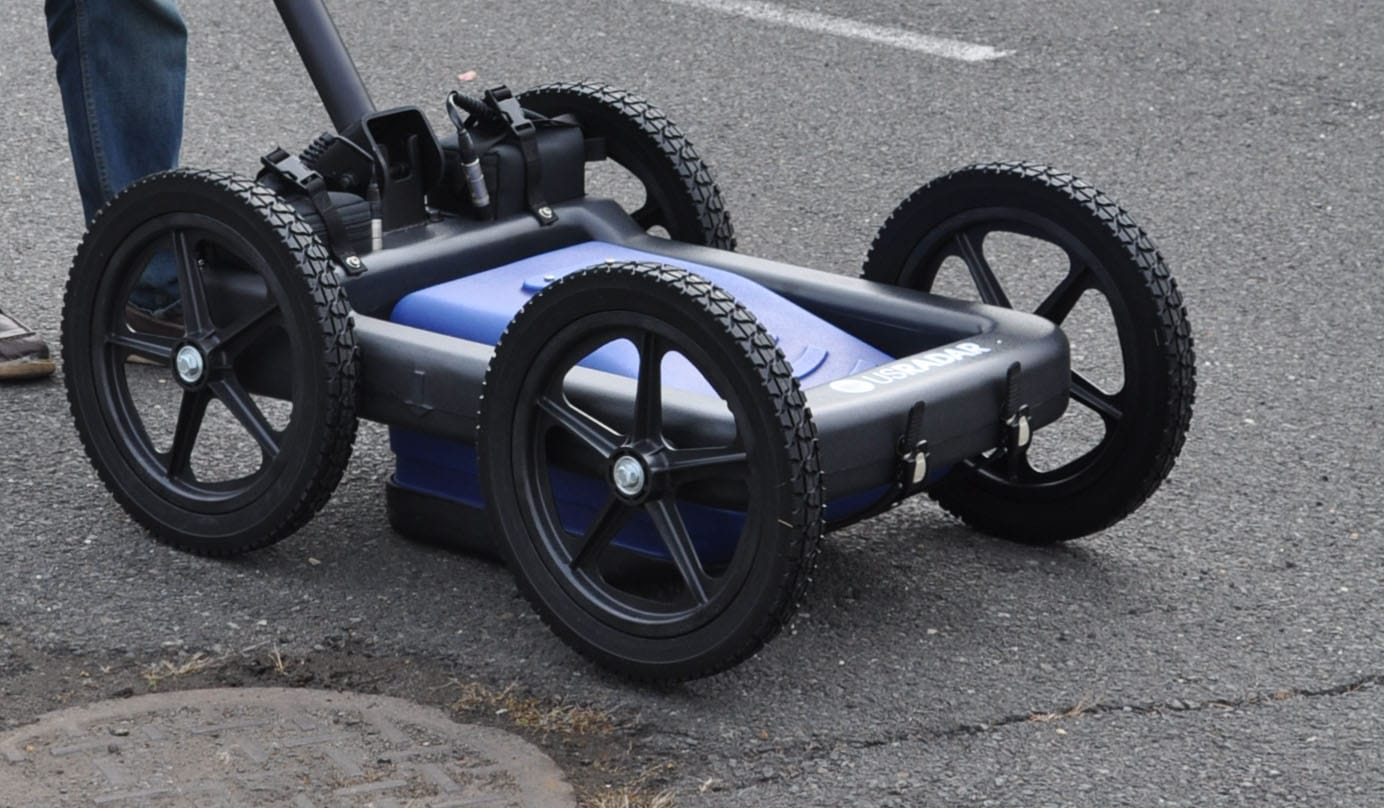
The GPRover features patented slope correction technology for slope and cross-slope of the GPR and GPS antennas to increase overall accuracy on uneven terrain. Paired with our durable cart design, the GPRover is practically all-terrain and suitable for most work environments.

Getac F110 TECHNICAL SPECIFICATIONS

G7

Operating System

Windows 11 Pro

Graphics

Intel® UHD Graphics

Mobile Computing Platform

Intel® CoreTM i5-1335U Processor Max. 4.6GHz with Intel® Turbo Boost Technology- 12 MB Intel®
Smart Cache

Storage & Memory

8GB DDR5
256GB PCIe NVMe SSD

Display

11.6″ Wide Viewing Angle TFT LCD FHD (1920 x 1080)
Protection film
1,200 nits LumiBond display with Getac sunlight readable technology
Capacitive multi-touch screen

Keyboard

Power button
4 tablet programmable buttons

Pointing Device

Touchscreen
– Capacitive multi-touch screen

Audio

Integrated speaker
Integrated dual-array microphone

I/O Interface

5MP webcam iii
8MP auto focus rear camera x 1
Audio in/out combo x 1
DC in Jack x 1
USB 3.2 Gen 2 Type-A x 1
ThunderboltTM 4 Type-C x 1

Communication Interface

Intel® Wi-Fi 6E AX211, 802.11ax
Bluetooth (v5.3) iv

Power

AC adapter (65W, 100-240VAC, 50/60Hz)
Li-ion battery (11.4V, typical 2680mAh; min. 2640mAh) x 2

Dimension (W x D x H) & Weight

314 x 207 x 25mm (12.4″ x 8.15″ x 0.98″)
1.49kg (3.29lbs) viii

Rugged Feature

MIL-STD-810H certified
IP66 certified
MIL-STD-461G certified ix
Vibration & 6ft (1.8m) drop resistant x

Environmental Specification

Temperature xii :
– Operating: -29°C to 63°C / -20°F to 145°F
– Storage: -51°C to 71°C / -60°F to 160°F
Humidity:
– 95% RH, non-condensing

Best GPR System

The GPRover Difference

The GPRover is a complete GPR system built for utility locating and utility detection across diverse ground conditions. GPS integration provides position accuracy within 2 inches (5 cm) out of the box, supporting project managers, general contractors, and surveying professionals who need precise location data for project planning and damage prevention. No base station or control points are needed. An annually subscription connects you to multiple reliable correction networks worldwide.

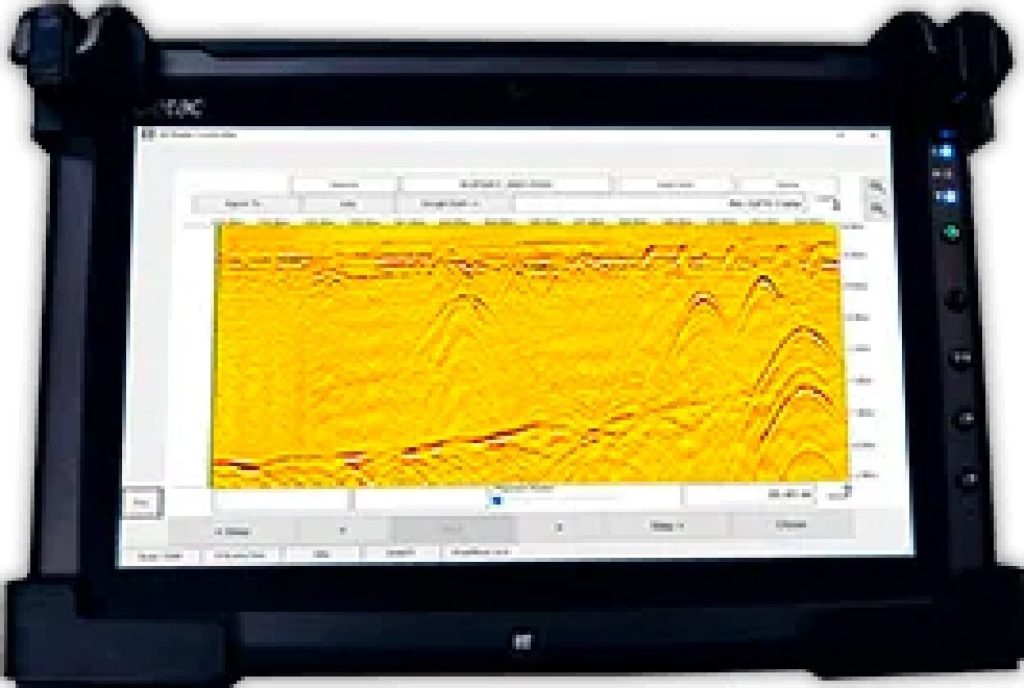
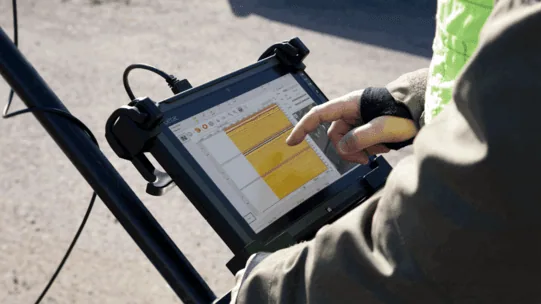
The Radar Acquisition Software automatically calibrates the antenna and processing settings to the materials being scanned, so any operator can power on and start collecting data with confidence. Findings display in real time while recording, enabling field crews to mark targets, measure distances, and create deliverable reports on site. This approach to data collection eliminates delays between scanning and decision-making, improving project efficiency and reducing costs.

Why Triple Frequency Technology Matters

The GPRover is built on the award-winning triple-frequency-range antennas introduced with the Quantum Imager. US Radar was the first to introduce true triple-frequency GPR technology, emitting three separate signals simultaneously to generate three independent datasets.

How Triple Frequency Closes the Gap

Dual-frequency systems sacrifice higher resolution high frequencies and the deeper imaging low frequencies, leaving a gap in the middle range ideal for locating targets like buried utilities, sewer lines, and water lines. The GPRover’s triple frequency antenna closes that gap by covering low, mid, and high frequency ranges in a single pass. You can detect both shallow non-metallic utilities and deep subsurface structures with one method and one scan, then cross-compare findings with greater accuracy and confidence.

Beyond EM Locating

Electromagnetic induction (EM locating) is effective for metallic utility lines, but EM locators rely on a primary magnetic field to trace conductive materials, leaving non-metallic objects invisible. Ground-penetrating radar uses radar pulses to image subsurface objects based on their material properties and dielectric properties rather than conductivity alone. The GPRover detects both metallic and non-metallic utilities, giving you a comprehensive view of what’s beneath the surface.

GPRover Applications

Utility Locating and Mapping

Utility locating is the GPRover’s primary strength. The system maps underground utilities including water lines, sewer lines, gas lines, telecommunications cables, and electrical conduits. With GPS integration, every detected target is georeferenced in real time, creating a utility map that project managers and general contractors can use for excavation coordination and damage prevention. This documentation helps prevent service disruptions and serious injury caused by accidental utility strikes.

Private Utility Detection

Locating private utility lines on commercial and residential properties requires equipment capable of detecting both metallic and non-metallic utilities. The GPRover identifies buried utilities regardless of material type, providing accurate data for facility managers and excavation contractors who need to know the exact position of existing utilities before digging.

Subsurface Structure Mapping and Construction Support

Beyond utility lines, the GPRover detects underground storage tanks, abandoned foundations, voids, buried objects, and other subsurface structures. For environmental applications, the system identifies potential areas of concern without invasive excavation. Construction companies can survey a site before breaking ground, and the system’s GPS mapping capabilities produce as-built documentation that all project contributors can access.

Built for the Field

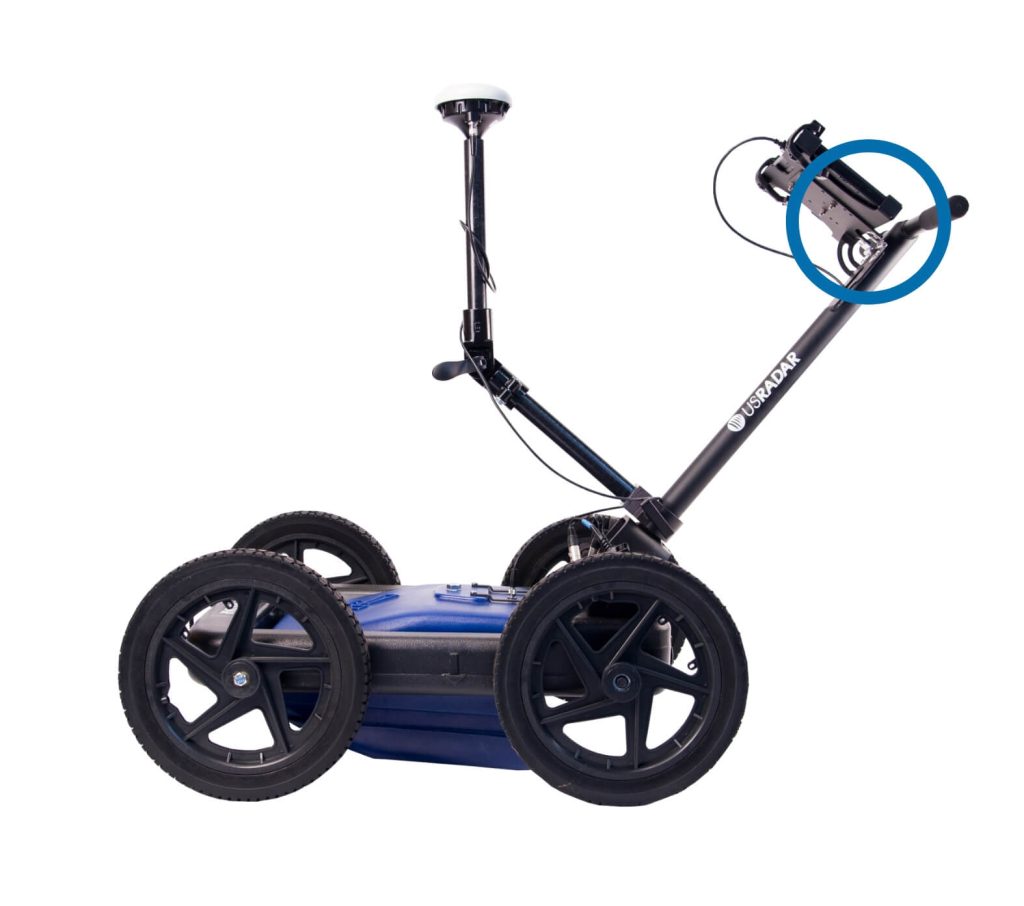
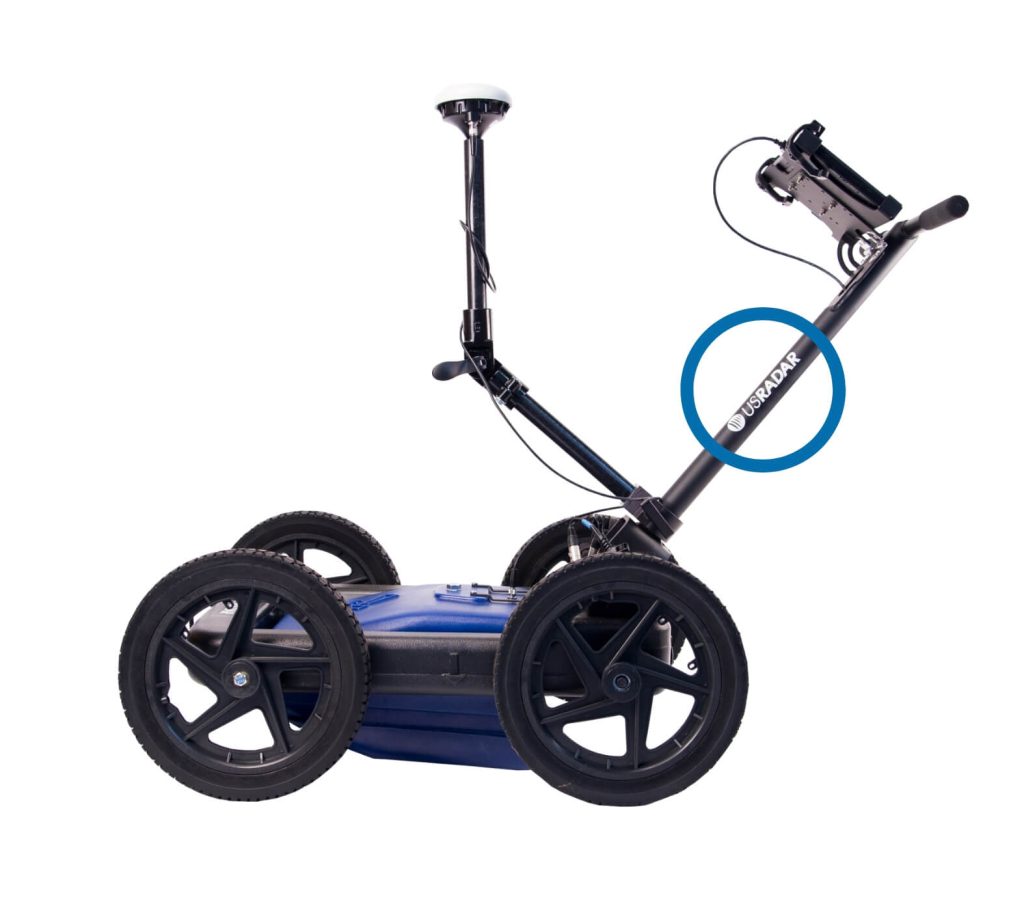
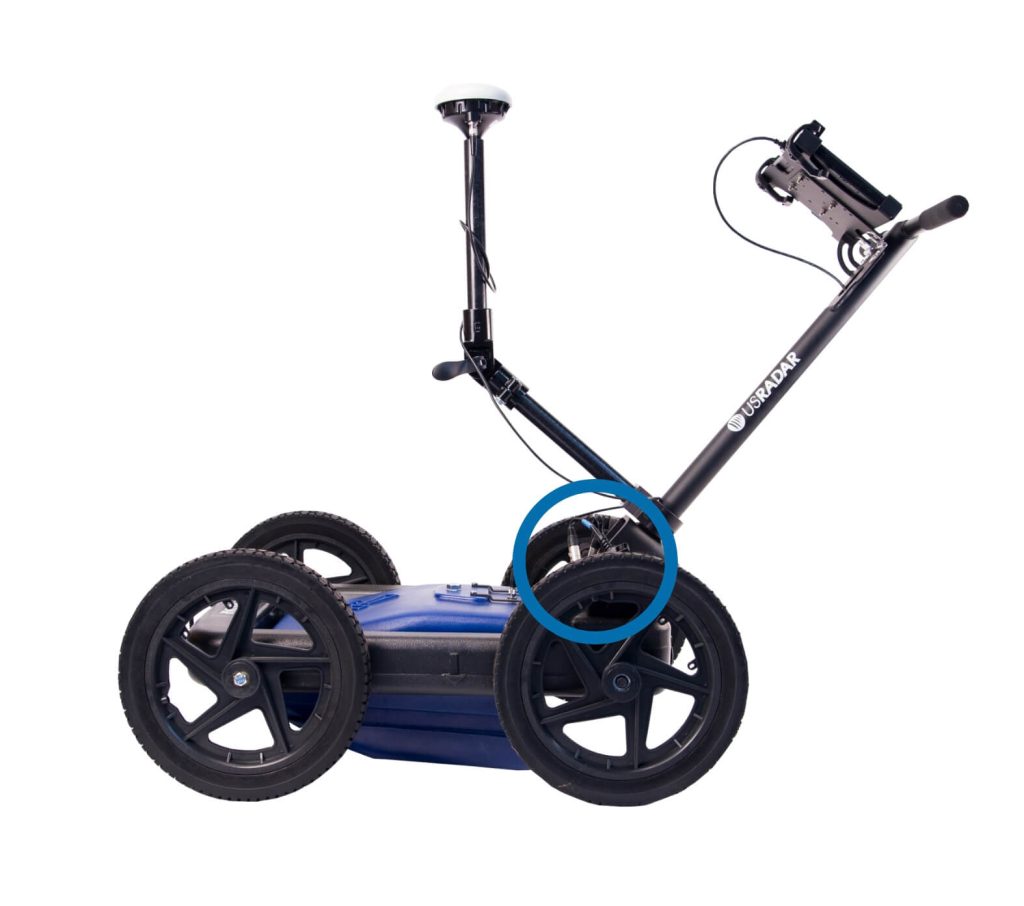
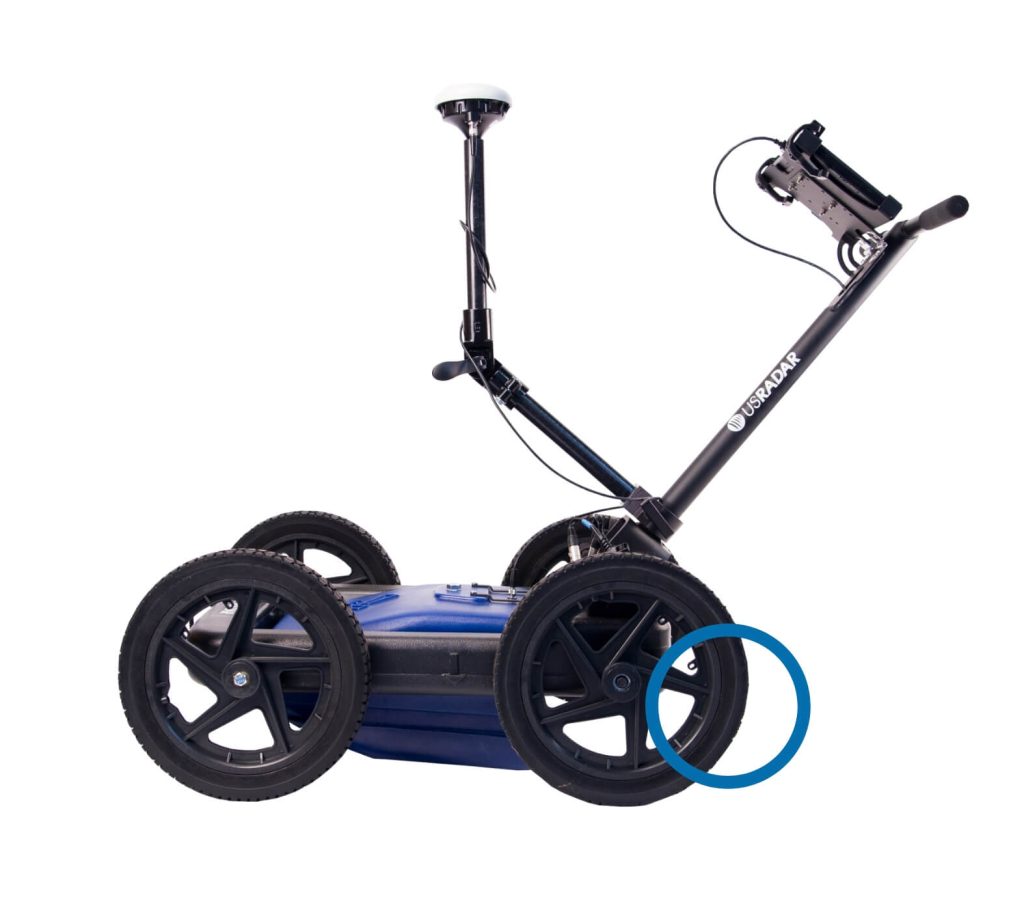
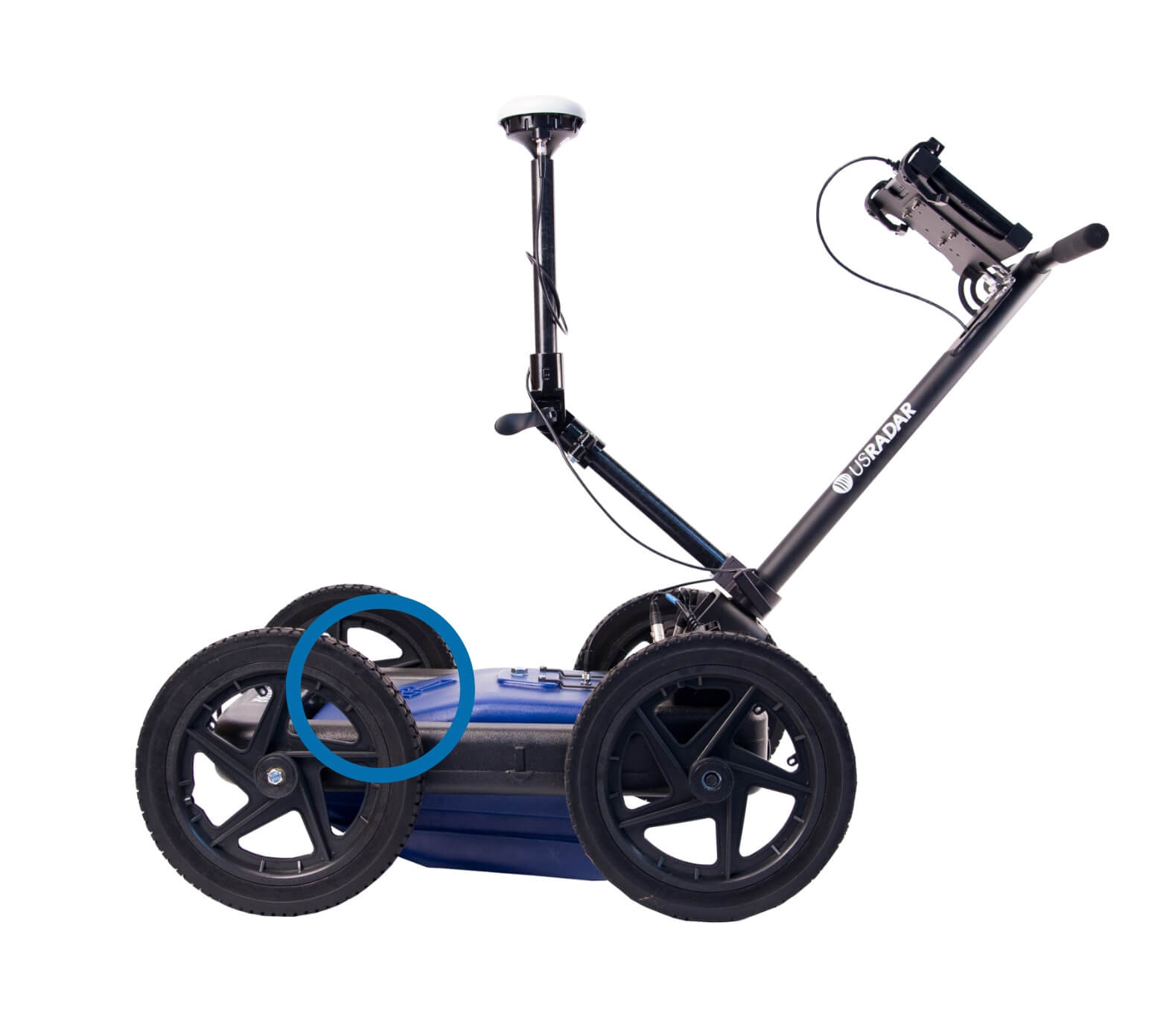
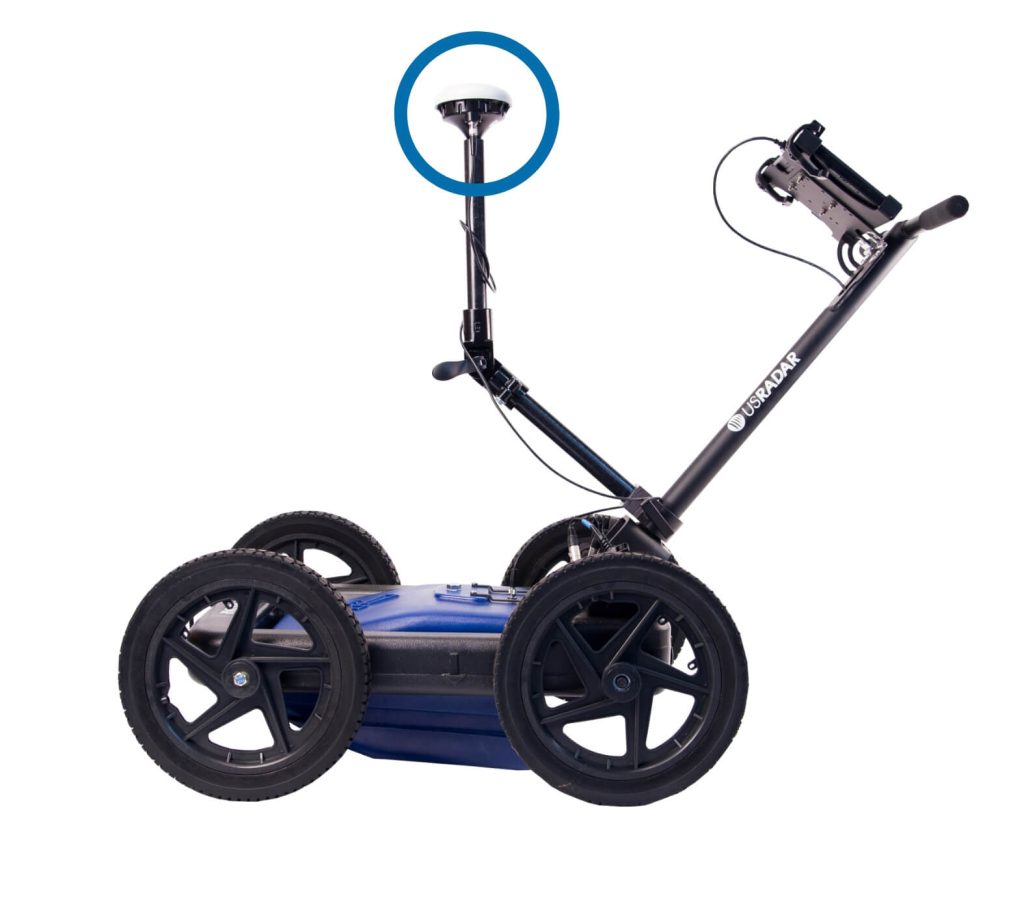
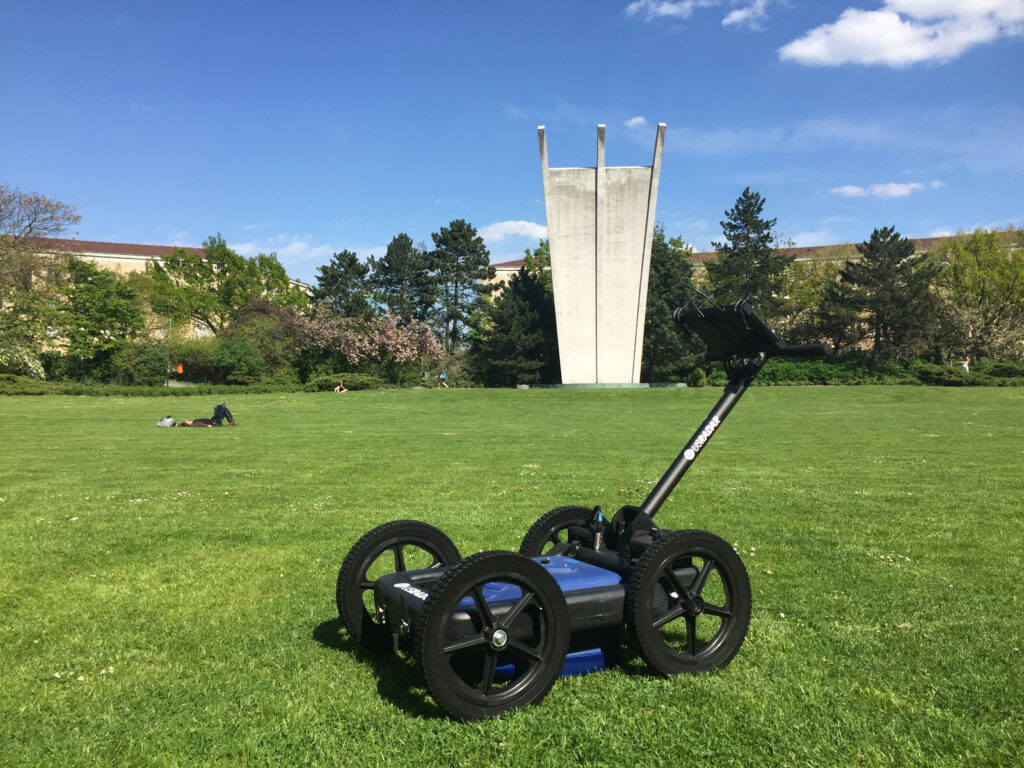
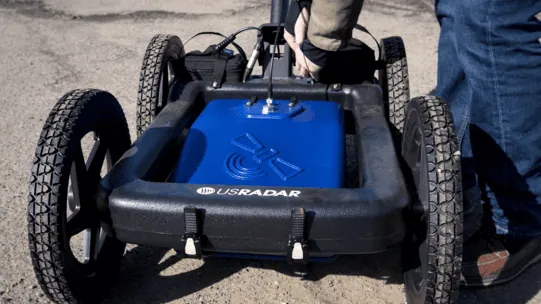
Designed and built in the USA, the GPRover reflects over 30 years of field experience and end-user feedback. The weather-resistant, daylight-readable Getac tablet provides real-time data processing on a high-performance CPU. Two hot-swappable battery packs deliver up to 8 hours of continuous runtime each. Rigid airless tires require no maintenance and cannot go flat, making this GPR equipment practically all-terrain. A foldable cart handle enables easy storage and transport.

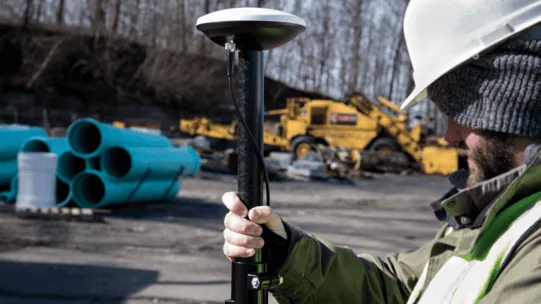
Patented slope correction technology automatically compensates for slope and cross-slope of the GPR and GPS antennas, increasing overall accuracy on uneven terrain. Optional pole-mounted GPS can be centered over the antenna for maximum precision, and the system integrates with most high-end GIS and RTK units.

Software That Delivers Results

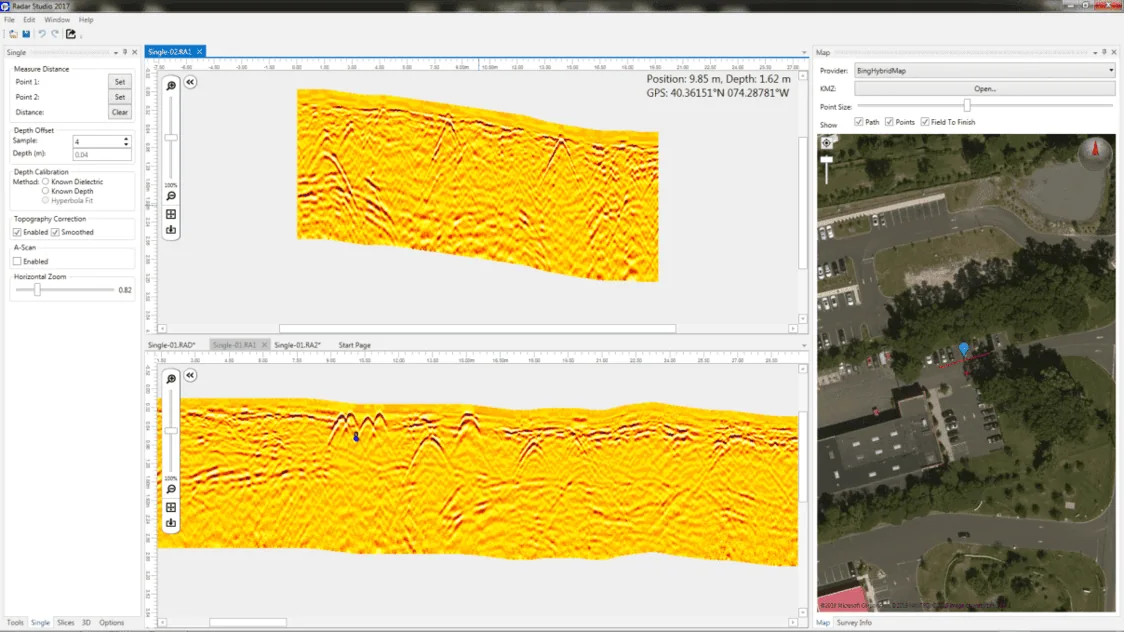
The GPRover ships with the Premium Radar Acquisition Software package plus GPS mapping capabilities as a complete, ready-to-use system. After auto-calibrating to surrounding soil conditions, the software displays findings as you scan. You can mark targets, measure distances, enhance images at specific depths, and save data for future analysis. All findings are recorded with GPS coordinates, creating permanent digital records that replace temporary paint markouts.


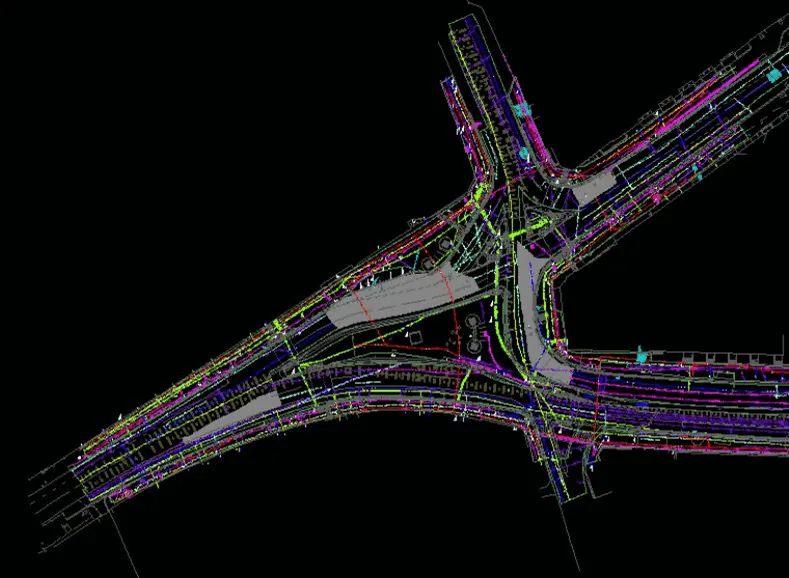
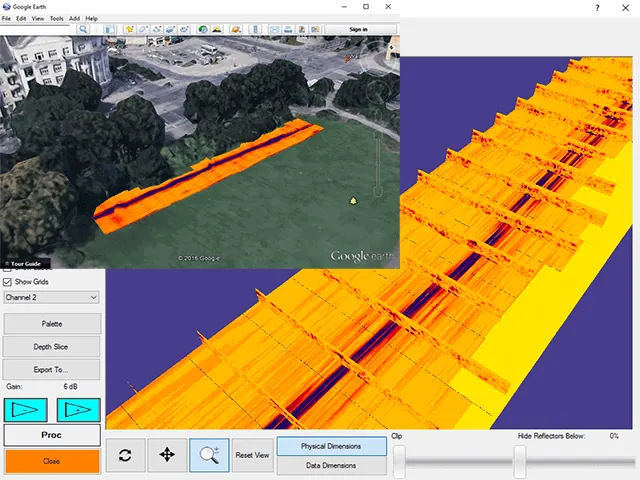
For projects requiring deeper analysis, Radar Studio transforms raw GPR data into dynamic visuals with annotation, depth slice creation, and export to CAD files, Google Earth, and other mapping solutions. The interface allows you to import as-built maps and compare them against radar data for precision locating. the system supports 3D imaging, and data can be exported to third-party software packages for seamless integration with your current technologies.

Contact Us

Ready to see what the GPRover can do for your next project? Contact our team to discuss your utility mapping needs, or explore which GPR system is best for you.

Frequently Asked Questions

What types of buried utilities can the GPRover detect?

The GPRover detects both metallic and non-metallic utilities, including water lines, sewer lines, gas lines, telecommunications cables, and fiber optic conduits. Because ground-penetrating radar responds to changes in material properties and dielectric properties beneath the surface, it identifies subsurface objects regardless of composition. This gives it a significant advantage over EM locating, which can only trace conductive utility lines.

The triple frequency antenna enables detection of buried utilities up to 30 feet (9.14 m) deep. Lower frequencies achieve greater depth penetration, while higher frequencies provide finer resolution for shallow targets. Three frequency ranges in a single pass deliver comprehensive coverage without swapping antennas.

GPR works effectively across a wide range of soil types, and the Acquisition Software auto-calibrates to surrounding soil conditions at each site. In wet clay soils, GPR systems are generally limited to detecting near-surface disturbances. The GPRover’s triple frequency technology maximizes usable data in varied environments by providing three independent datasets for cross-comparison.

Ground-penetrating radar detects the location, approximate depth, and geometry of subsurface objects, but cannot identify specific material composition. Excavation and coring are the only reliable methods for confirming soil composition or utility material type. GPR provides essential position and depth data for project planning, damage prevention, and safe excavation.

EM locators use a magnetic field to trace conductive metallic utility lines over distance. Ground-penetrating radar images a cross-section of the subsurface, detecting both metallic and non-metallic objects at various depths. Many professionals use both technologies depending on job site requirements. The GPRover excels at providing a comprehensive view of all utilities in an area, including non-metallic utilities that EM locators cannot detect.

The GPRover provides GPS accuracy within 2 inches (5 cm) with no base station required. Every detected target is automatically georeferenced in real time, and data can be exported to CAD files, Google Earth, and other mapping solutions to create permanent, shareable utility maps that replace temporary paint markouts.

Both use US Radar’s triple frequency technology to detect targets up to 30 feet deep. The GPRover is purpose-built for utility mapping with integrated GPS, patented tilt correction, and a cart-based design for efficient site coverage. The Quantum Imager offers the same imaging capabilities in a versatile configuration suited to a broader range of GPR applications including archaeology and environmental assessment.

Connect the battery, power on, and the Acquisition Software automatically calibrates the antenna to surrounding ground conditions. You can begin collecting accurate subsurface data within minutes of arriving at the job site.